Chen Chien-Yu: From Raising Fish in a Bathtub to Fish-consumption Education — More Than 30 Years in Public Service Safeguarding Taiwan’s Fish
By Kuo Yen-Feng | Photography by Lee Shuo | Photo Courtesy of by Fisheries Agency
Chen Chien-Yu, former Deputy Director-General of the Fisheries Agency is a low-key person. His wife jokingly nicknamed him “Mr. Eight P.M.” because he left home early at six every morning and usually returned home at 8:00 p.m. When major food-safety or production-and-marketing incidents occurred, working late into the night was not uncommon. Majoring in aquaculture, he once raised fish in the bathtub of his dormitory and even tasted the fish feed he had formulated. These seemingly amusing anecdotes actually reflect the way he approached his work during more than 30 years in public service: policies cannot be based solely on literature, but on the true situation on the grassroot level. After retirement, Chen is still busy, with a stream of invitations to give talks. To those invitations, he always gives favorable responses as he is willing to share his professional knowledge.
Chen’s entry into public service was beyond his own expectation. He once had a plan to work on a shrimp farm in Brazil. After completing his military service, however, he received a job assignment from what was then the Fisheries Bureau, and that was how he entered public service. Over the years, he got involved in various aspects of fishery, from fish-market management and seafood safety to production and marketing coordination, fish consumption education, and the expansion of domestic and international markets. He says he is not particularly good at “pioneering”; instead, he is better at synthesizing and integrating information. “It’s about thinking things through from all angles, and then getting each task done properly, one by one.”
As a student, Chen received solid, hands-on training in aquaculture. He learned to calculate the density of live feed organisms and formulate fish feed himself. His teachers would often remind him, “If you wouldn’t eat it yourself, why would the fish want to eat it?” He has kept those words in mind ever since, and they have shaped the way he approaches his work. After entering public service, another senior official told him, “It is the industry that gives us a reason to serve as civil servants. If the industry were to disappear, neither would we have a reason to be here.” That is why he has always cared deeply about what fishermen and the industry truly need.
Safeguarding Seafood at the Source: Building a Safety System for Aquatic Food
When asked about the institutional changes that have had the greatest impact on aquatic food safety and the production and marketing of fishery products in Taiwan, Chen points to two in particular: pre-market monitoring and the traceability-based sampling and testing system.
When Chen was first assigned to take charge of aquatic food safety, he was not really familiar with the field and was even somewhat reluctant to take on the job. His supervisor gave him three months to get up to speed, so he had no choice but to start from scratch, gathering the relevant materials and going through them one by one. By the end of that period, he had put together a long-term plan for the program.
At the time, around 1,500 aquatic food samples were supposed be tested across Taiwan each year. But with vast areas of aquaculture and a wide variety of farmed species, the question was: How should sampling proceed? Chen decided to take 80 percent of the samples based on the proportions of aquaculture areas, production volumes, and species in different counties and cities. The remaining 20 percent was reserved for targeted testing of higher-risk species, particularly those flagged by problems detected in the marketplace.
“You never wait until all the fish have been sold before discovering there’s a problem.” Chen wanted to move the regulatory process ahead, identifying potential risks at the source before the food ever reached the market.
But how to locate fish farms that have never been registered? He came up with the idea of using aerial imagery. “A paddle-wheel aerator running in a pond suggests fish being raised there.” Unregistered fish farms were thus identified so the operators were guided through the registration process.
Helping Children Get to Know Fish: Making Fish Consumption Education Part of Everyday Life
Fish consumption education was another area to which Chen has devoted considerable time and energy.
Chen himself grew up by the sea in Tongxiao, Miaoli. During a school visit, he noticed that the children could rattle off more than a dozen kinds of vegetables and fruits. But when it came to fish, they struggled after naming just five or six. In the end, they even started counting “whales” and “wooden fish” (a Buddhist ritual instruments) among their answers.
“Taiwan is an island, yet our children don’t even know their fish.” The experience left a deep impression on him.
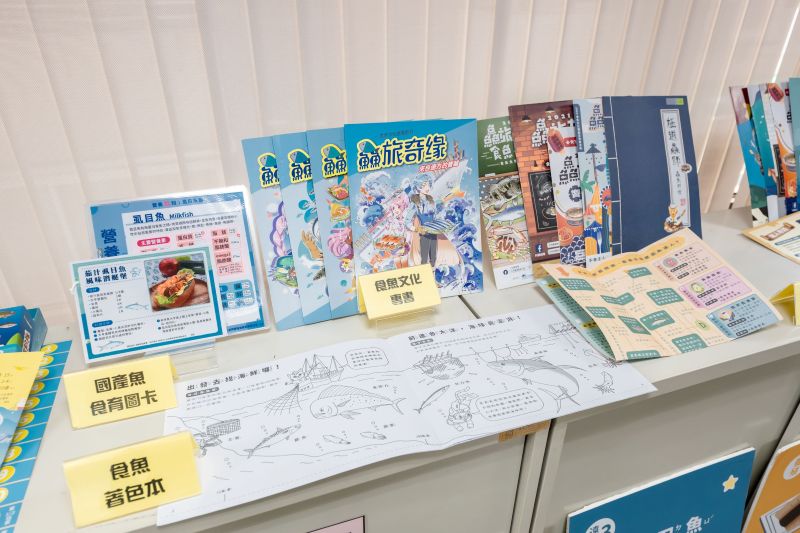
It got him thinking that fish consumption education should be about more than telling children that “fish is good for your health.” Fish can be made fun, familiar, and approachable. With a keen interest in Chinese characters, Chen compiled a wealth of information on Chinese characters containing the “fish” radical and visited schools to share with teachers and nutritionists the stories behind the names of different fish.
Knowing about fish was only part of the challenge. There was also the problem of children being reluctant to eat fish. At school lunch, fish bones were one of the main concerns. To address this, the team combined food-processing technology with product development to create boneless milkfish patties. The team also partnered with convenience stores to launch sea bass soup with shredded ginger in a retort pouch that could simply be heated and served, making it more convenient to include fish in everyday meals.
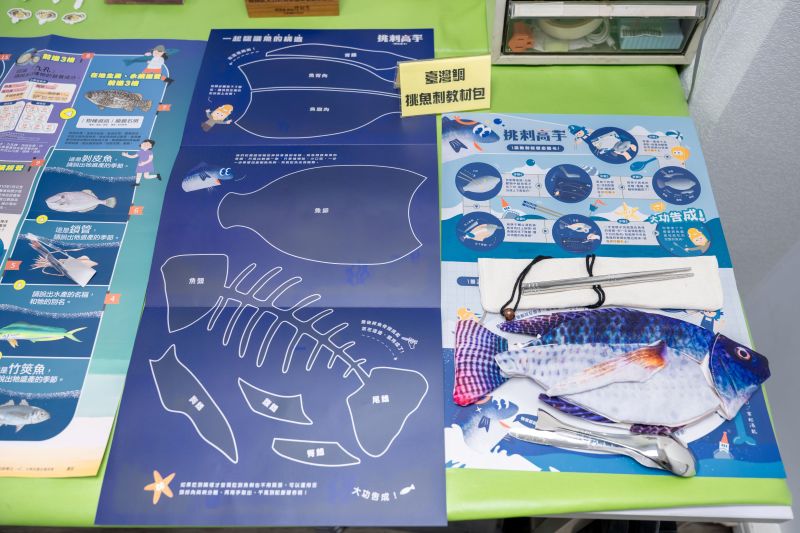
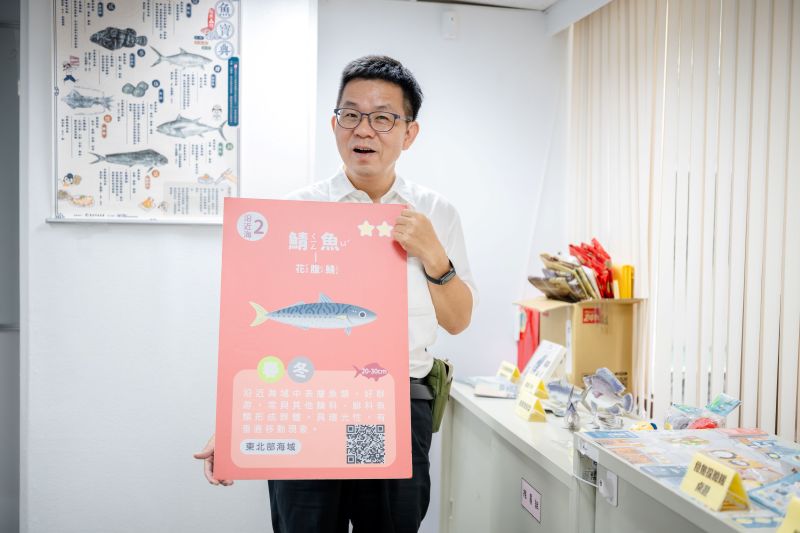
Later, Chen and his team began uploading the teaching materials, picture cards, posters, and other resources they had accumulated over the years to the “Fish Education Knowledge Hub,” for schools to download and use. This allowed fish consumption education to reach more students without being limited by the number of physical teaching materials available.
Chen often describes fish consumption education as “a multiplication problem.” From production and processing to cold-chain logistics, distribution, education, and consumption, every link in the chain has to do its part. “If even one link fails—if any one of them becomes zero—the whole equation comes out to zero.” He continues to support fish consumption education today because he believes the future of Taiwan’s fisheries depends on consumers understanding the value of fishery products. Just as importantly, he believes we need to start early in nurturing a new generation of consumers who know and appreciate the value of fish.
Eight Years Spent to Open Japan’s Market to Taiwan’s Giant Grouper
When it came to exploring overseas markets, Chen remembers most vividly the effort to urge the Japanese market to open for giant groupers from Taiwan. Japanese authorities had raised concerns of ciguatera poisoning and required evidence for its safety. The negotiations went on for eight years.
To address Japan’s concerns, the team compiled scientific evidence at every stage - from the farming environment, feed, and biosecurity practices to monitoring for toxic algae and maintaining traceability records further along the supply chain. Step by step, they provided evidence to demonstrate the safety of Taiwan’s farm-raised giant grouper and the controls in place throughout the production process. After years of discussions and negotiations, they finally made a breakthrough.
Even with the market open, there is still the challenge of processing. Japanese distributors had strict requirements for controlling microbial levels after thawing. Domestic processors in Taiwan initially considered that an extreme difficulty. The team worked closely with them, repeatedly fine-tuning sanitation practices, temperature controls, and cold-chain procedures until the requirements were finally met.
This experience also convinced Chen that the key to getting Taiwan’s aquatic products into international markets lies in contract farming and industry upgrading. It is more than raising high-quality fish. Every stage of the supply chain—from farming to processing and cold-chain logistics—has to be properly connected.
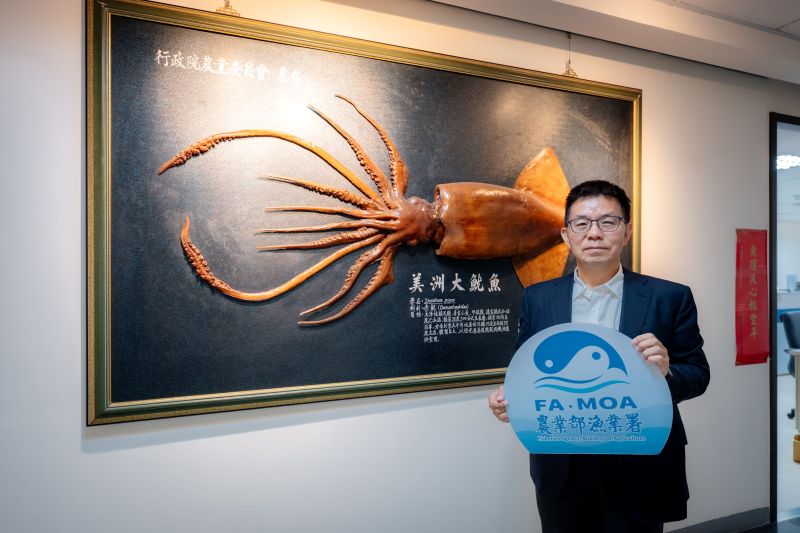
Figure 1: Throughout his more than 30 years in public service, Chen Chien-Yu has always remained focused on one question: What do fishermen and the industry need most.
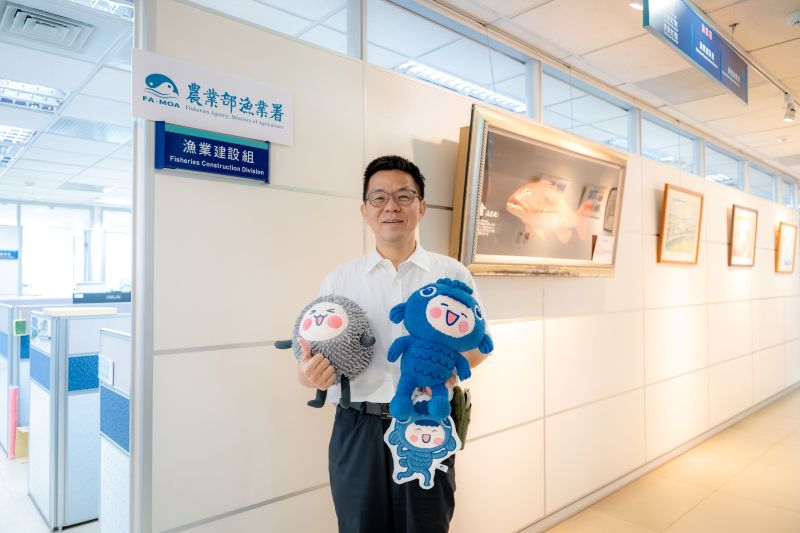
Figure 2: Warm and approachable, Chen portraited himself as Garfield, quick-witted and clear-headed, with a flexible mind and a talent for synthesizing and integrating ideas. That has earned him the nickname “Garfield Chen.”
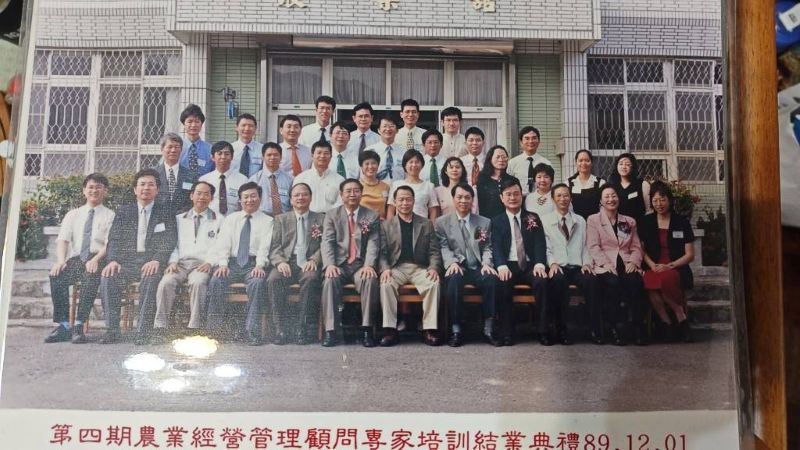
Figure 3: Chen says that participating in a consultant training program organized by the Council of Agriculture (now the Ministry of Agriculture) gave him training in business management, cost control, and risk management, enabling him to view agricultural issues from a broader “enterprise and industry” perspective.
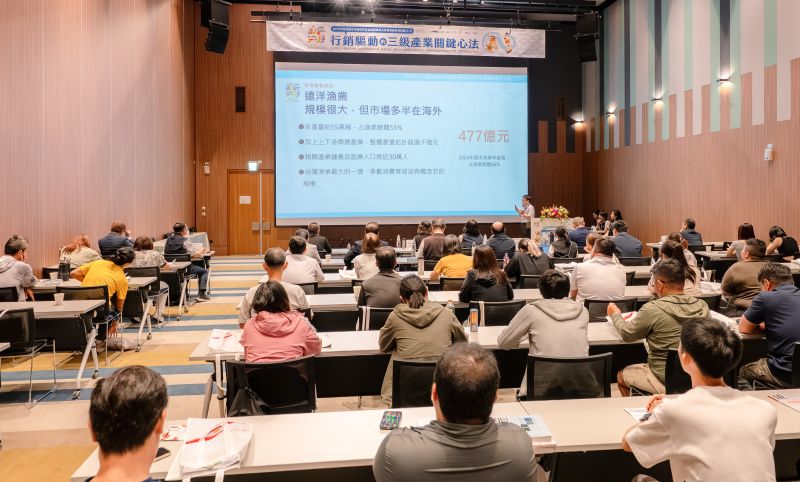
Figure 4: Chen shares his insights on “Quantifying the Market, Defining Value—the Core Logic of Fisheries Marketing” at a session of CPC’s Local Revitalization Excellence Management and Service Team and “Reading for Growth and Shared Prosperity” series.
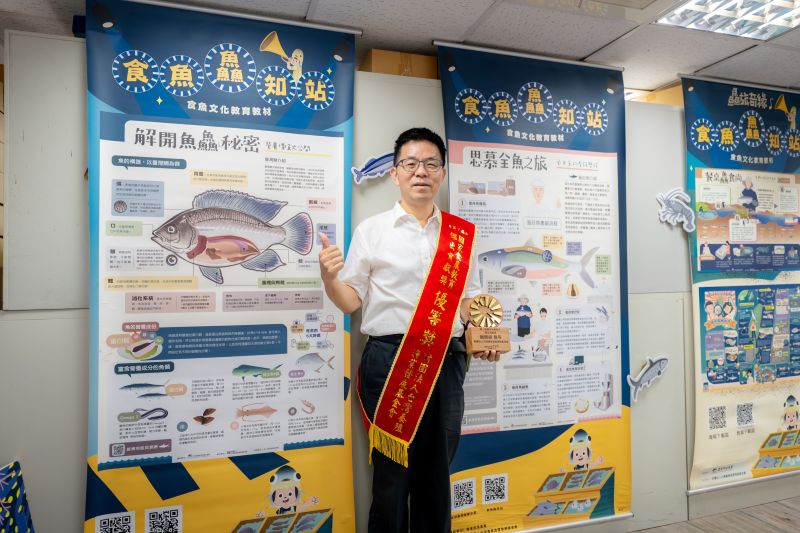
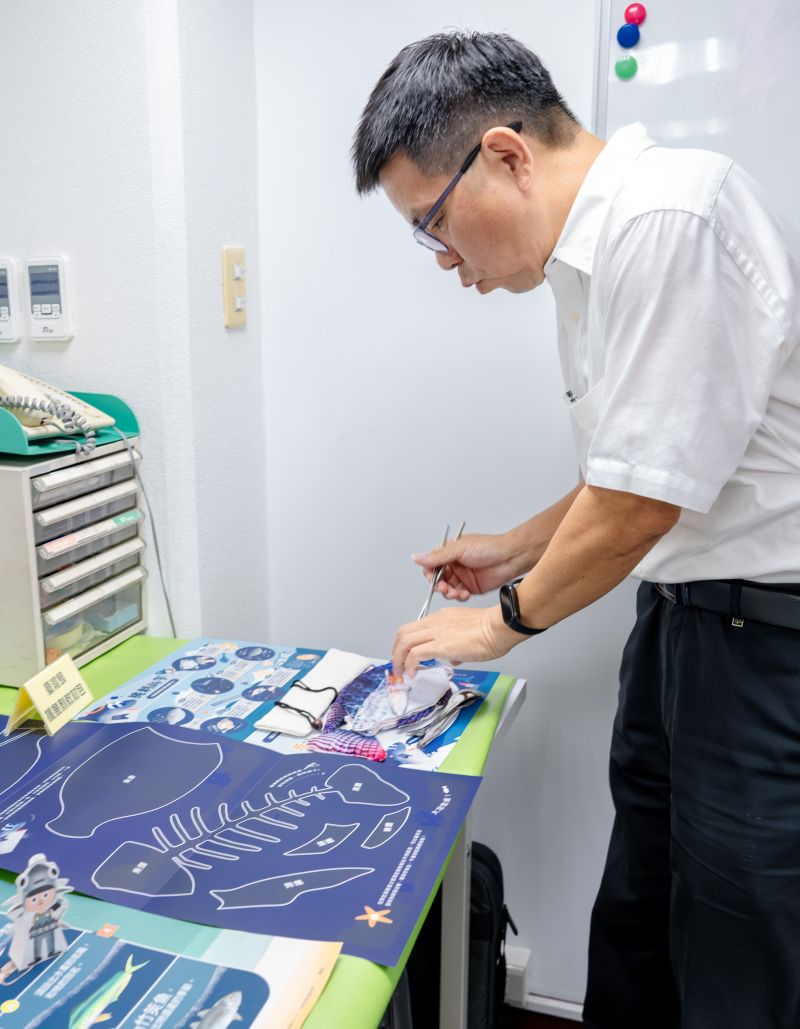
Figure 5: The team has uploaded its educational picture cards and time-lapse cooking videos to the “Fish Education Knowledge Hub,” where they can be downloaded for free use.
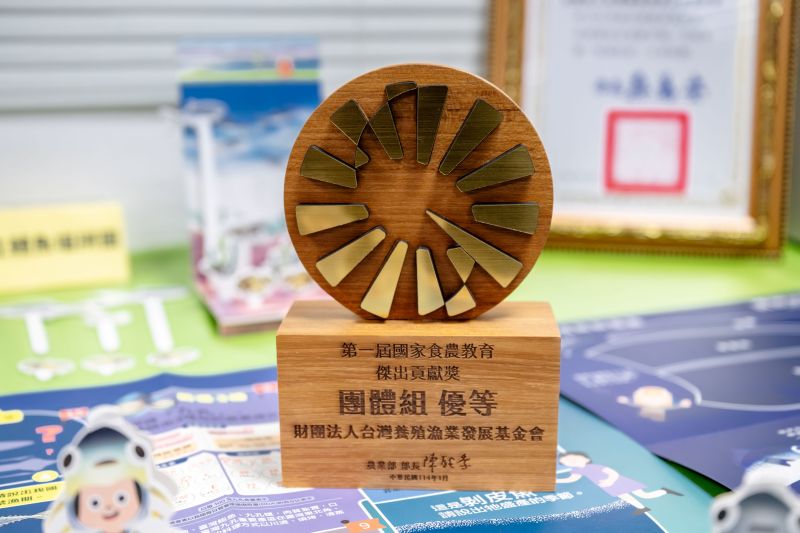
Figure 6: During his time at the Taiwan Aquaculture Development Foundation, Chen helped promote the initiative “Healthy Seafood: From Education to Sustainable Practice,” which received an Excellence Award in the organizational category at the First National Food and Agricultural Education Outstanding Contribution Awards.